
World Heritage · Los Lagos, Chile
Sixteen wooden churches on the Chiloé archipelago were inscribed on the UNESCO World Heritage List in 2000, under criteria (ii) and (iii). They are the result of a fusion between Jesuit and Franciscan missions and the naval carpentry of Chilote boat-builders. This guide explains why they matter, where they stand, and how to visit them as a long route.
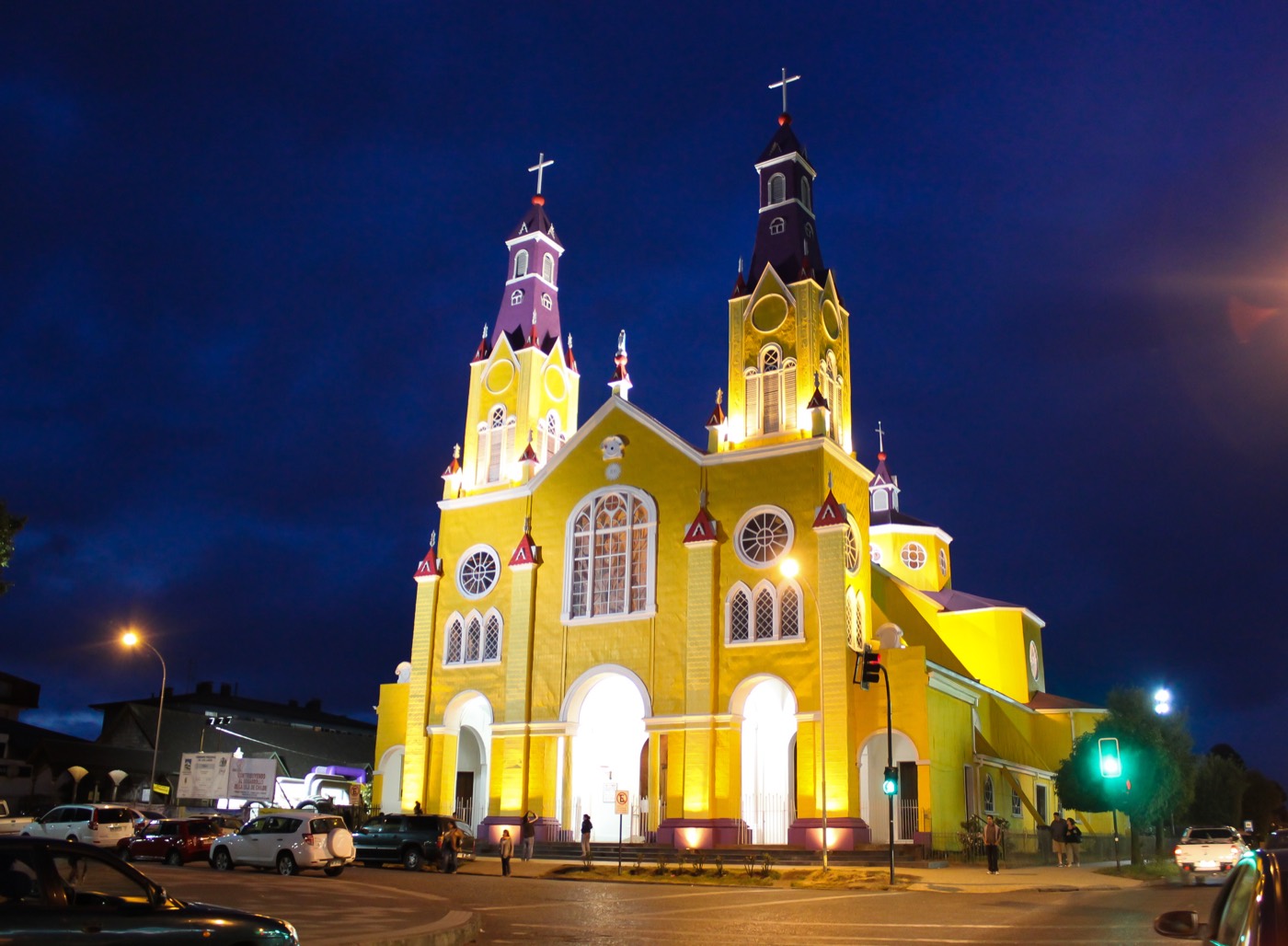
At the northern edge of Patagonia, the archipelago of Chiloé holds a heritage unlike anywhere else in Latin America: a network of sixteen wooden churches inscribed on the UNESCO World Heritage List in 2000 (Property 971, 24th session of the Committee), under criteria (ii) and (iii). Two additional temples —Chelín and Caguach— were added in 2001, completing the Site as we know it today.
Why World Heritage: criteria (ii) and (iii)
The UNESCO inscription rests on two criteria of Outstanding Universal Value:
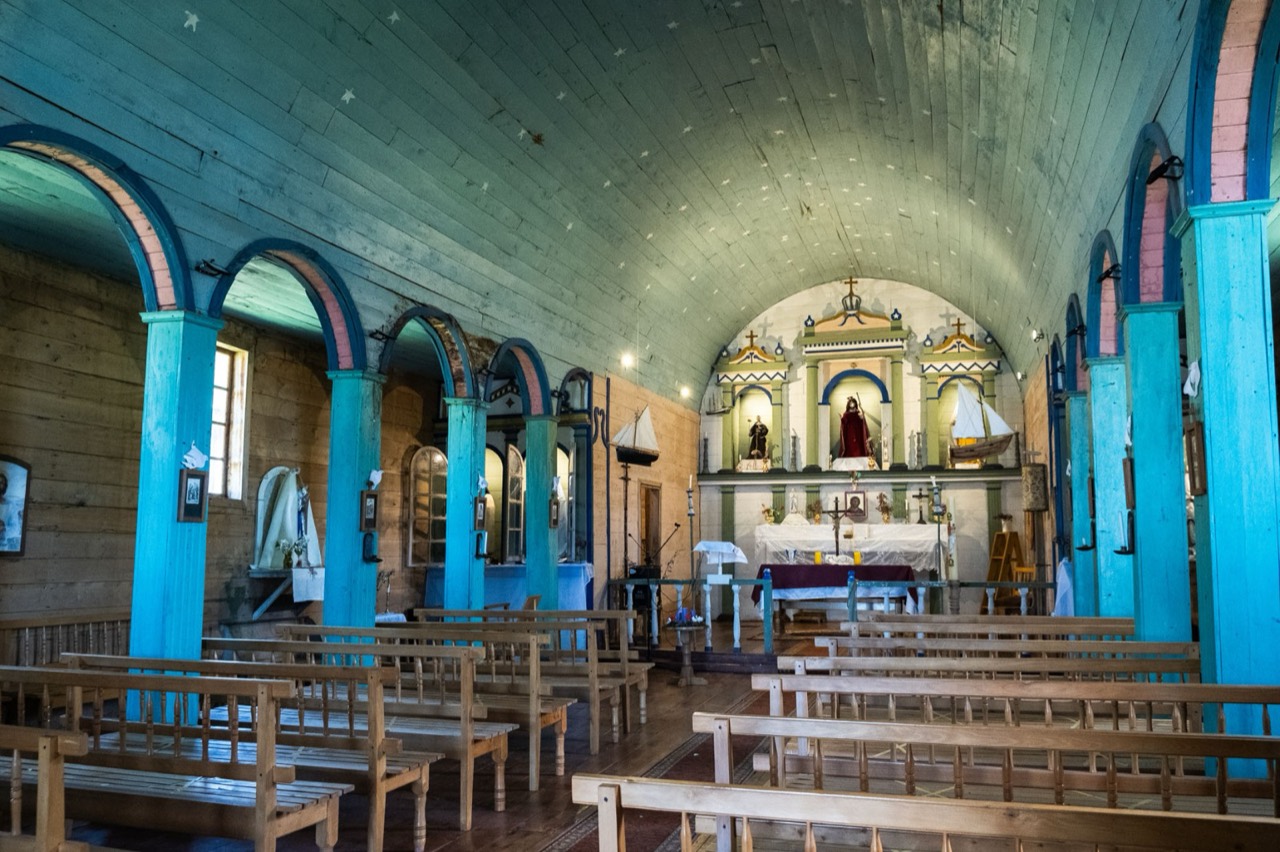
- Criterion (ii): the churches are the outcome of a successful fusion of European and Indigenous cultural traditions, producing a unique form of wooden architecture. Jesuit missionaries, present in Chiloé from the 17th century, brought European temple models, but their execution fell to local carpenters trained in the Chilote naval tradition — the same craftsmen who built boats for the Patagonian channels. That is why the inner vaulting often recalls an inverted hull.
- Criterion (iii): the churches are the supreme expression of a mestizo culture born of the Jesuit mission of the 17th and 18th centuries, continued by the Franciscans after the expulsion of the Society of Jesus in 1767. That culture is still alive across the archipelago.
Behind every temple lies the Misión Circular: the annual round of the Jesuits to dozens of island communities, supported by the fiscales, lay officers who kept parish life alive between the missionary’s visits. It is this living cultural web that UNESCO protects — not just the buildings.
The Escuela Chilota: a typology you can read from a distance
All sixteen churches share a typology known as the Escuela Chilota de arquitectura religiosa en madera:
- Basilican plan with three naves separated by wooden pillars, a choir over the portico and a presbytery at the eastern end.
- Facade tower oriented east, with a portico of arcades —usually five, sometimes three, seven or nine— and an octagonal bell tower in two or three stages.
- Gabled roof (sometimes three pitches) covered with tejuelas de alerce, hand-split Alerce shingles.
- Native timbers: Alerce for cladding, Ciprés de las Guaitecas, Coigüe and Mañío; structural joints in wood joinery and trunnels (tarugos), with almost no structural metal in the original conception.
The interior decoration, colour and colonial religious imagery, as well as the orientation, siting and surrounding landscape, are explicit attributes of the property.
Storytelling: the carpinteros de ribera
What makes these temples internationally singular is the figure of the carpintero de ribera, the boat-builder. The same men who shaped the hulls of Chiloé’s fishing and cargo vessels shaped the naves and vaults of its churches. That is why the Iglesia Santa María de Loreto de Achao (still with its 18th-century nave), the Iglesia de Dalcahue with its nine-arch portico, and the Iglesia de San Francisco de Castro, with its yellow-and-violet tower, can be read as naval architecture as much as religious architecture. There is something of the Arctic stave church and something of the carpentry of the North Sea in these buildings — and yet nothing here is borrowed from the North: the tradition is native to the southern fjords.
The sixteen churches
Geographically: nine on the eastern coast of the Isla Grande, three on Lemuy, two on Quinchao, one on Caguach and one on Chelín.
- Eastern Isla Grande: Colo (Quemchi); San Juan, Tenaún and Dalcahue (Dalcahue); Nercón, Rilán and Chelín (Castro); Chonchi and Vilupulli (Chonchi).
- Central Isla Grande: San Francisco de Castro.
- Isla de Quinchao: Achao, Villa Quinchao, Caguach.
- Isla de Lemuy: Aldachildo, Ichuac and Detif (commune of Puqueldón).
A long route through the archipelago
- Day 1: Ancud → Quemchi (Colo) → Dalcahue (model church, San Juan, Tenaún) → Castro (San Francisco, Nercón, Rilán, Chelín).
- Day 2: Ferry to Isla de Quinchao (Achao, Villa Quinchao, Caguach).
- Day 3: Ferry to Isla de Lemuy (Aldachildo, Ichuac, Detif) → back via Chonchi (Vilupulli, Chonchi).
Timing and access: the Ruta 5 between Ancud and Castro is paved year-round. Subsidized ferries to both islands operate year-round: the Dalcahue Channel ferry to Isla de Quinchao runs 24 hours a day, Monday to Sunday, with continuous departures every 10 minutes (free for foot passengers; $3,500 CLP for standard cars), while the ferry to Isla de Lemuy (from Huicha, just south of Chonchi, to Chulchuy) departs every 15 minutes between 7:00 a.m. and 12:45 a.m., with hourly crossings overnight (free for pedestrians; $2,950 CLP for cars and pickups). The austral summer (December–March) gives longer daylight and better weather, but Chiloé rains heavily any month.
Custodianship
The Site is co-managed by the State of Chile (Consejo de Monumentos Nacionales), the Diocesis of Ancud (ecclesiastical owner of the temples) and the Fundación Iglesias Patrimoniales de Chiloé, a non-profit established in 2010 as a continuation of the former Fundación Amigos de las Iglesias de Chiloé. Day-to-day keepers are the communities themselves, which is precisely why the Site is alive rather than frozen. At its 46th session (2024), the World Heritage Committee acknowledged conservation progress and reiterated the need for heritage-impact assessments on any project that could affect the Outstanding Universal Value.
To travel the churches of Chiloé is to trace the religious, cultural and maritime history of southern Chile, plank by plank. For full itineraries, ferries, festive feasts and how to plan a visit, see the official regional resources at loslagos.travel, and the downloadable cartography of the Sitio Patrimonio Mundial on the Fundación Iglesias Patrimoniales de Chiloé website.